Divine Power · For a DTC mechanical-keyboard brand on Shopify
A keyboard store where an invalid build can't reach the cart.
A direct-to-consumer keyboard brand sells boards that customers configure part by part. I designed the specifications for its Shopify product configurator, and the team built it to allow only valid builds, based on real-time inventory, so a build that is missing a required part, or uses one that is out of stock, never reaches the cart. I also built a tool with Claude that standardizes the store's product descriptions at volume.
- Problem
- A keyboard is configured from many parts, an invalid build must never reach the cart, and the product pages needed copy in one format.
- My role
- Product manager. I designed the configurator's specifications and the team built it; I built the product-description tool myself, with Claude.
- What I did
- Specified a configurator that walks the customer from version to parts, and built a tool that rewrites product descriptions into one format.
- Outcome
- Tight behavior that allows only valid builds based on real-time inventory, which speeds up logistics and the supply chain and makes the experience clearer through better communication, and each product's benefits in one reusable format.
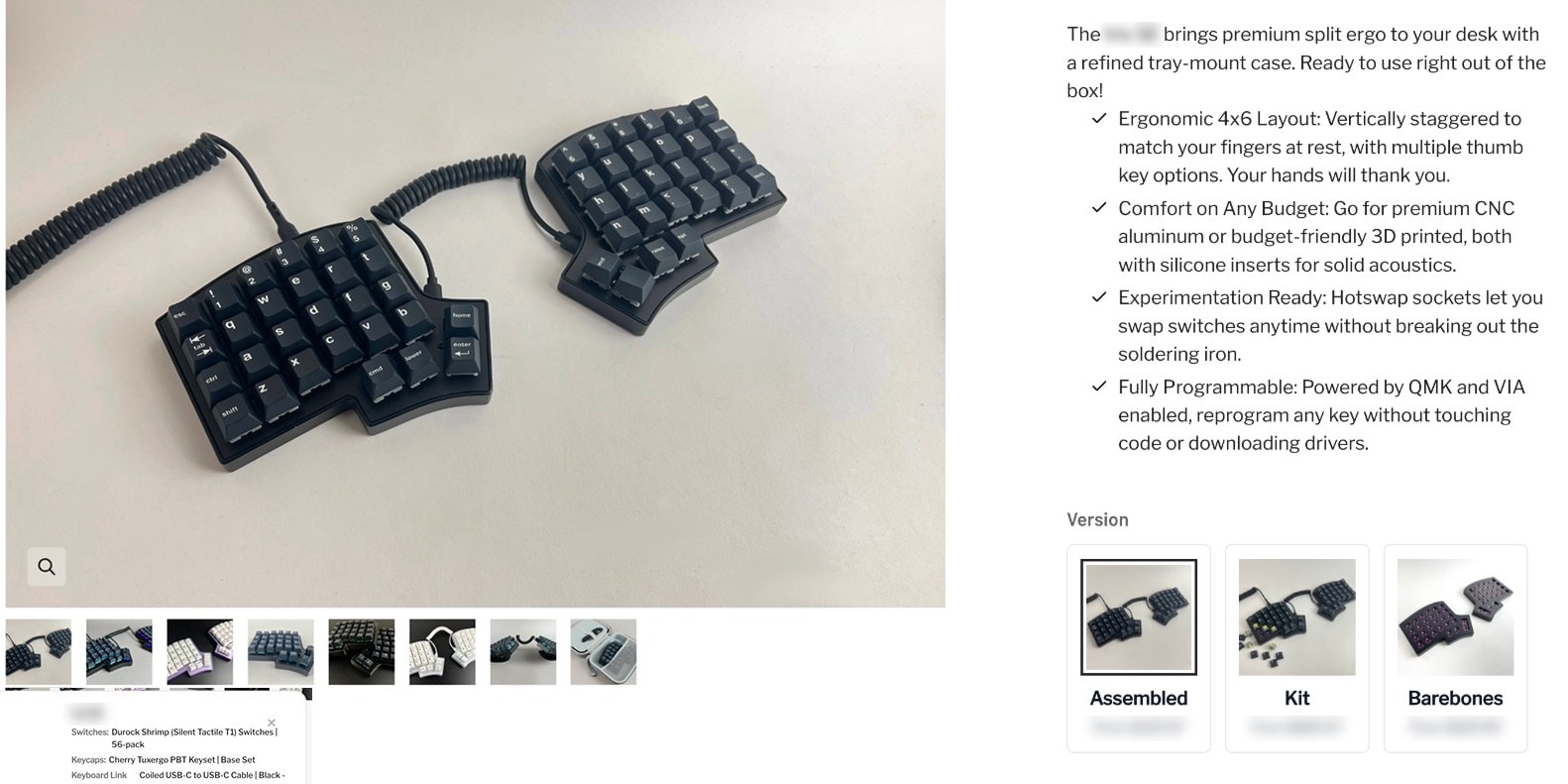
From version to parts
The customer chooses a version (assembled, a kit or barebones), then the case and the parts, one row each, tagged required or optional: the switches, the keycaps, the cable that links the two halves, the keycap layout and both thumb clusters are required; a tenting stand kit is optional.
The rows are where a build can go wrong: a customer could skip a required part, or pick one that has run out. So the rule is simple to state: a build reaches the cart only when every required part is chosen and in stock.
I specified the configurator and the team built it, and its behavior is tight: it allows only valid builds, based on real-time inventory. That speeds up logistics and the supply chain, since an order arrives complete and in stock, and it makes the experience clearer through better communication, because every row says what is required and what is not.
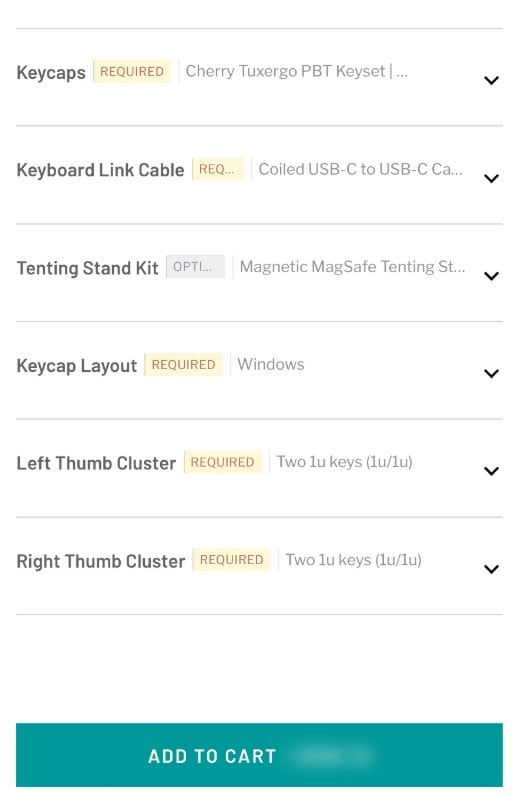
Before the board goes in the cart, a summary lists every choice in one place: switches, keycaps, cable, tenting kit, layout and both thumb clusters, so the customer sees the whole build at once.
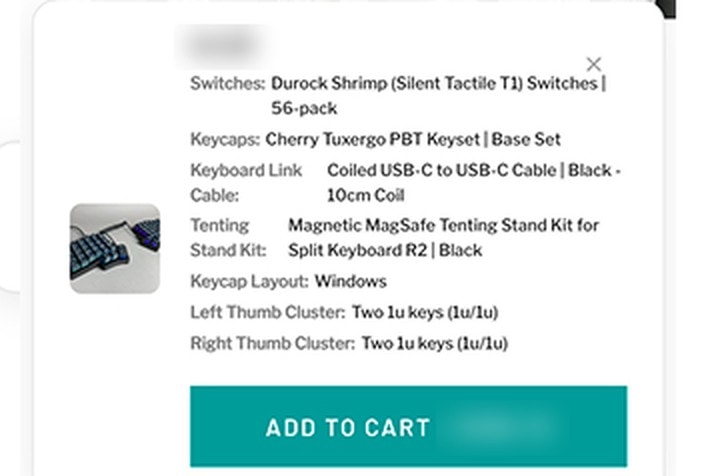
The product copy
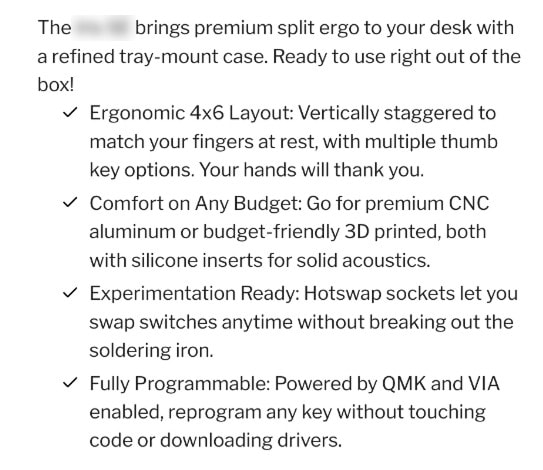
The same store needed its product descriptions in one shape. I built a tool with Claude that standardizes them at volume: each product's benefits pulled out into a consistent format, a short lead and then one benefit per line.
That format made the benefits reusable. They went into the brand's other marketing content, and the consistent product pages kept supporting the store's Google positioning and growth.
Results
Only valid builds
reach the cart, based on real-time inventory
Speeds up logistics and the supply chain, and makes the experience clearer through better communication
Client details are omitted or blurred for confidentiality.