Divine Power · Alpha · 2026
An AI planning assistant that acts on your day, not just talks about it.
Clarity OS plans a business owner's day from their goals, tasks and calendar, and acts on them through 13 tools. I wrote the product requirements, designed the agent's tools and the context it works from, and built it with Claude Code. It is an alpha I used myself and never launched, considered as a complement to the productivity platforms people already use.
- Problem
- Goals, tasks and calendar live in separate tools, and no assistant sees all three or can act across them.
- My role
- Product manager and builder: wrote the PRDs, designed the tools, the model routing and the context, and built it with Claude Code.
- What I did
- An assistant that creates, moves and updates items across calendar and tasks with 13 typed tools, routes work across three Claude models by cost and task, and works in English or Spanish.
- Outcome
- A working multi-user alpha I used myself and never launched, and a second PRD that focuses it on owners running their year by a set method.
What it does
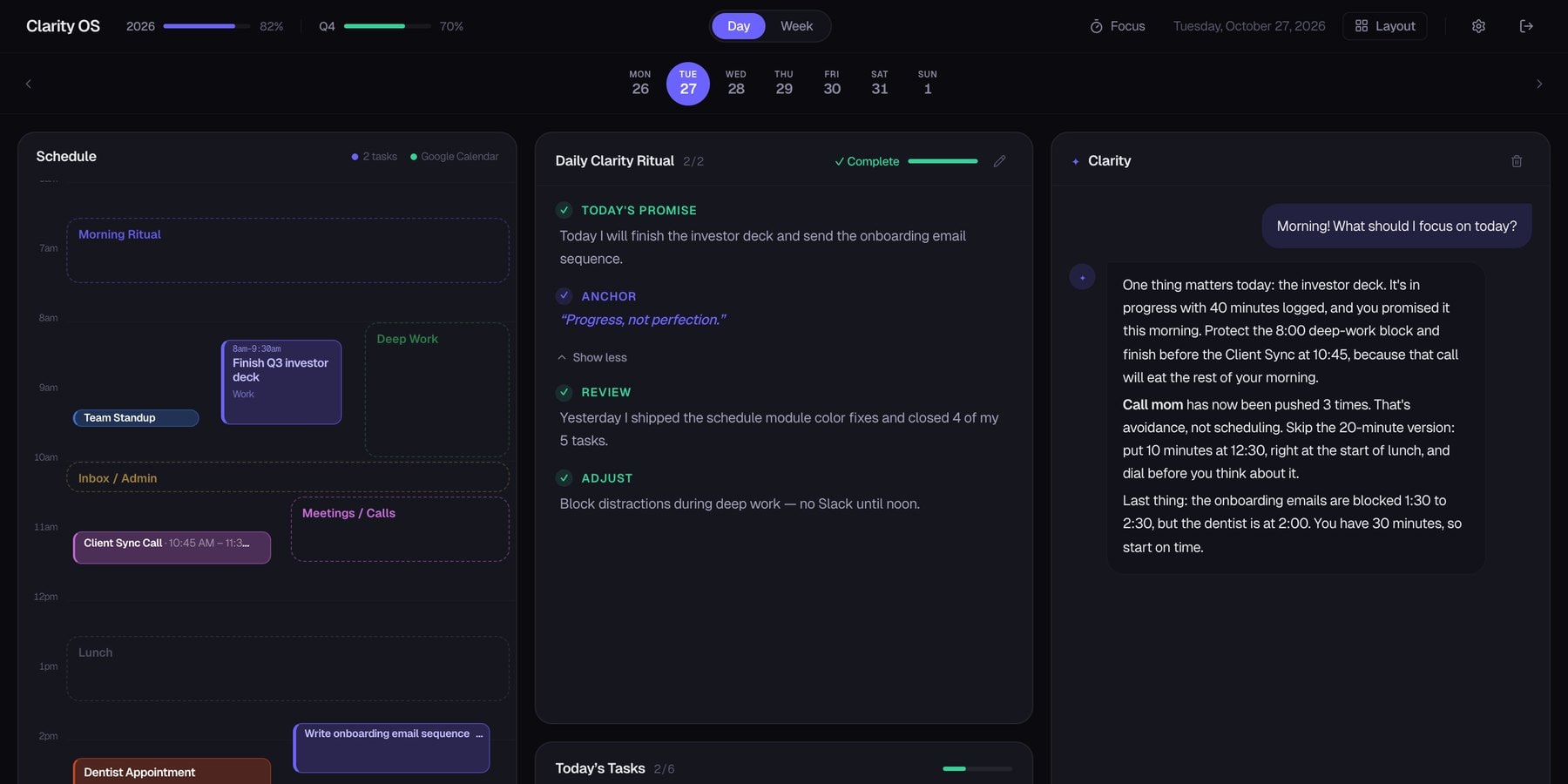
Each morning starts with a short ritual: the day's promise, an anchor, a review of yesterday and one adjustment. Then the assistant briefs you. It knows the schedule, the open tasks and the goals for the year and the quarter, so it can say what matters today and act on it: create a task, move a block, update an event.
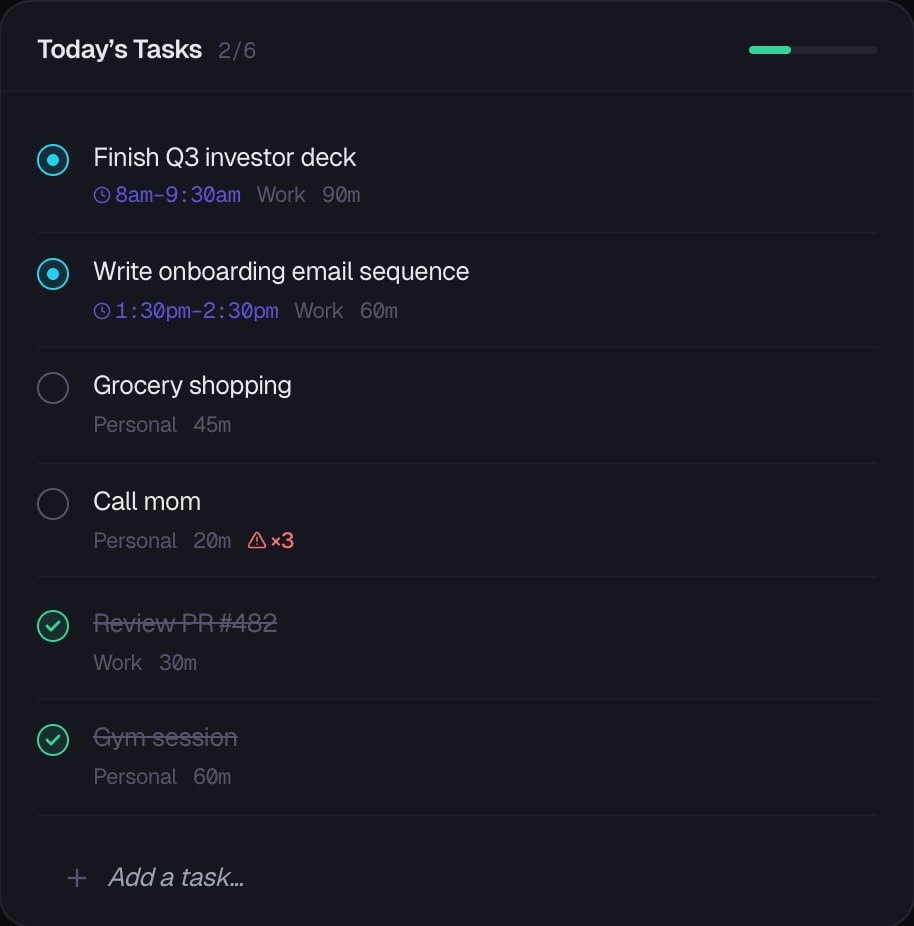
It also tracks how often a task slips. A task pushed three times is flagged, and the flag reaches the assistant with everything else it knows about the day, so the briefing can deal with it.
The decisions that shaped it
- The model never does date math. Schedule conflicts are computed on the server and handed to the model as facts. Date arithmetic is where language models slip, and code doesn't.
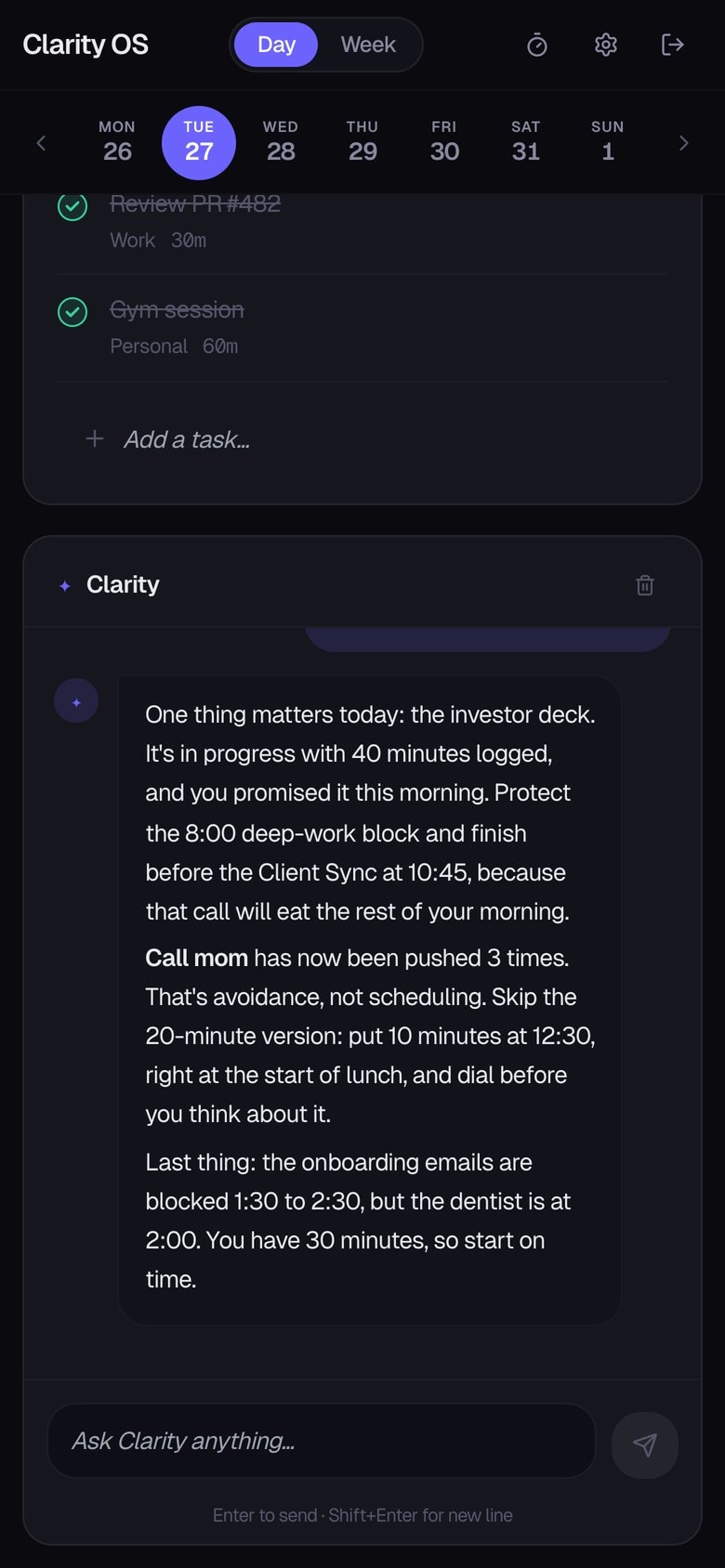
- Tools to act, not only to advise. 13 typed tools let it change the calendar and the task list, so the user doesn't have to switch apps to follow its advice.
- The right model for each job. Three Claude models, routed by cost and by what the task needs.
- Context assembled before every answer. The schedule, the goals, the computed conflicts and the recent conversation go into each prompt, so it remembers what you said and works from what is true now.
- Built multi-user. Google sign-in, streaming replies and rate limits, in English or Spanish.
The week
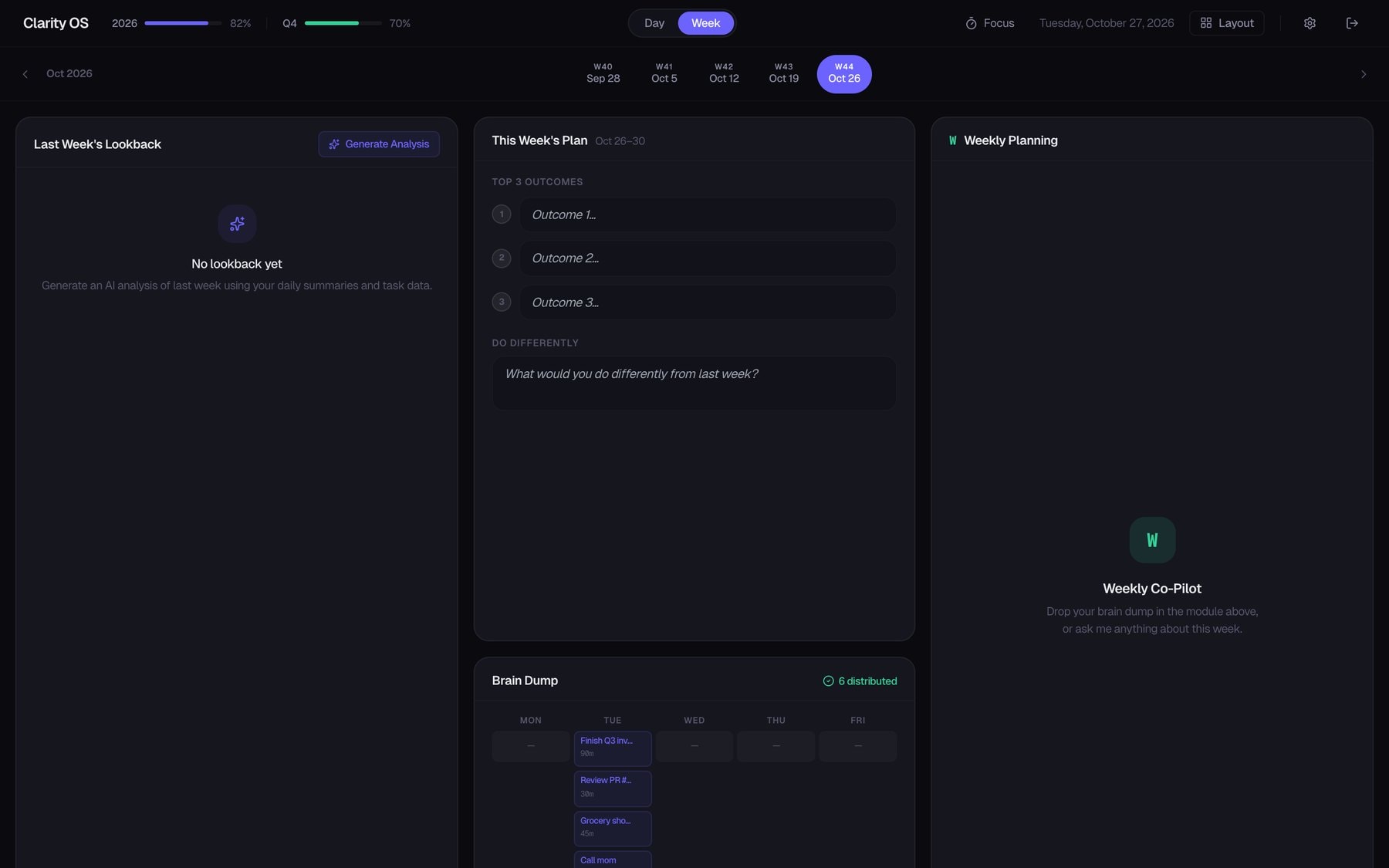
The weekly view is where a brain dump becomes a plan: three outcomes to set for the week, a board that places tasks on the days, and a lookback the assistant generates from last week's daily summaries and task data.
From version one to version two
The first PRD, in February 2026, was for my own daily use. The second is the multi-user version built to scale: a niche version of the general personal AI agents, for business owners who run their year by a set method. It treats the method as the product, routes models by job with evals, and writes down the thresholds for each next step: when to move to a cheaper or fine-tuned model, how to price it, and when to open it beyond the alpha. The cost path runs from a frontier API to a hosted open-weight model with retrieval, then a fine-tuned open-weight model, then reserved GPUs, each stage behind its own threshold.
Results
13
typed tools the assistant acts with, across calendar and tasks
Schedule conflicts are computed on the server and handed to the model as facts
3
Claude models, routed by cost and task
An alpha I used myself, never launched