Cabana Data · Costa Rica · 2021–2022
From a planner's spreadsheet to a platform financial entities can offer.
A personal-finance planning firm in Costa Rica ran its method in Excel workbooks and needed a platform it could offer through financial entities. Through the agency Cabana Data, I led research, product design and user experience, from a discovery session with its planners to 47 final screens. The client uses the platform.
- Problem
- Planners ran every client's financial plan in an Excel workbook. To offer the service through financial entities, the firm needed a platform.
- My role
- Product designer through Cabana Data, alongside my Associate PM role. A separate team built the platform.
- What I did
- Moderated discovery with the planners, ran the persona analysis, card sorting and user tests, and designed the flows, the interface and a design system.
- Outcome
- 47 screens, a design system and three email templates handed off in October 2022. The client uses the platform.
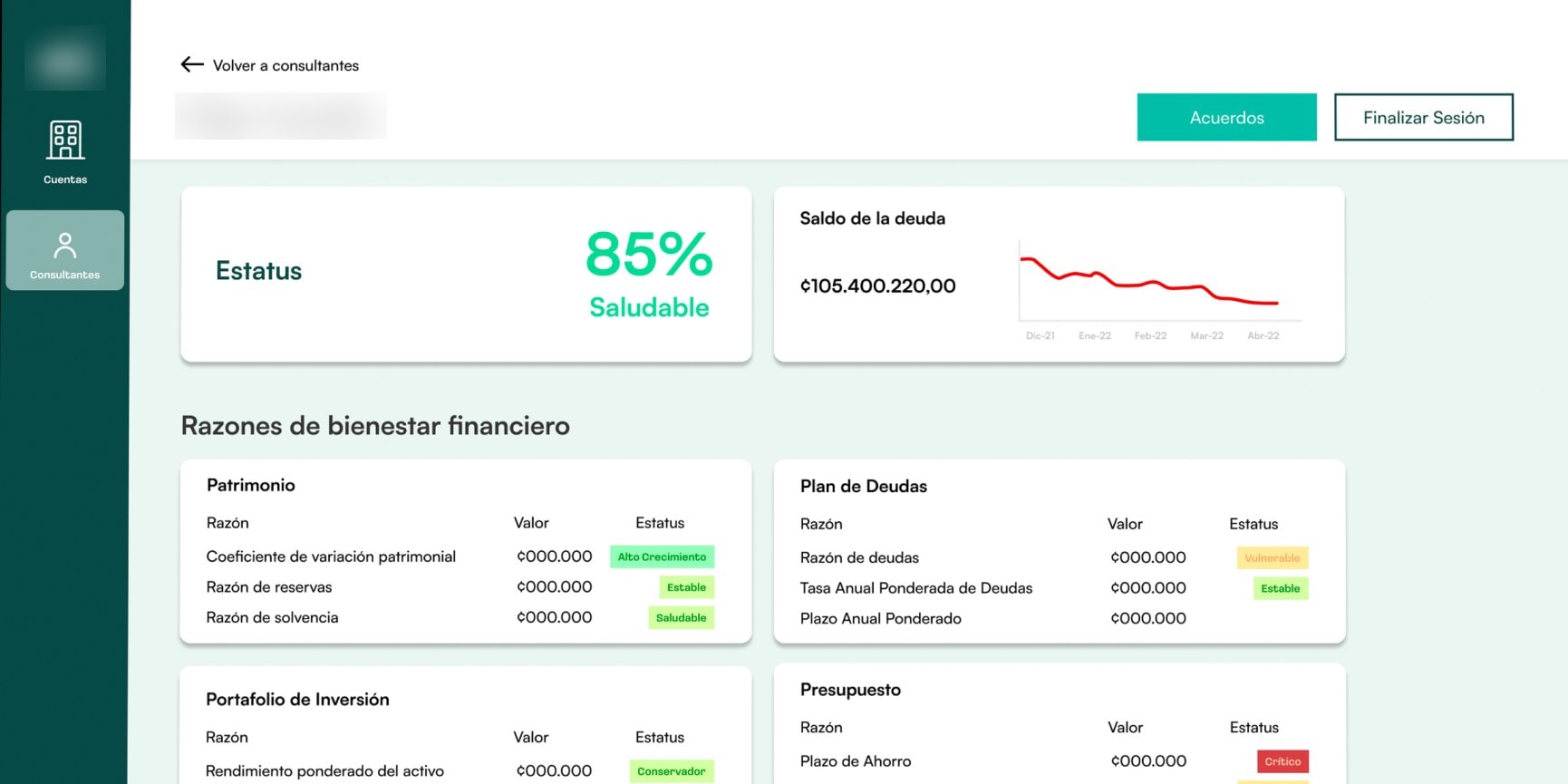
Watching the method run
The firm's method lived in spreadsheets: a client profile, a budget, a debt plan, net worth, a portfolio, cash flow, and a weighted matrix of financial well-being ratios. Its standard was ISO 22222, which covers personal financial planning.
I started with a discovery session. Two planners and a client ran a simulated planning session, and I paused it at each step to ask what was happening and what preparation sat behind it. The session closed with a paper-prototype test of the first scenarios. Studying the workbooks gave the platform its spine: four session modules, budget, debt plan, net worth and portfolio, mapped straight from the sheets.
Research with the people who would use it
The agency recruited the participants; I ran the persona analysis, the card sorting and the user tests. I also wrote an interview guide for the firm's end clients, built around one risk: a figure shown badly can discourage someone who should feel motivated to save or get out of debt.
Designing the session
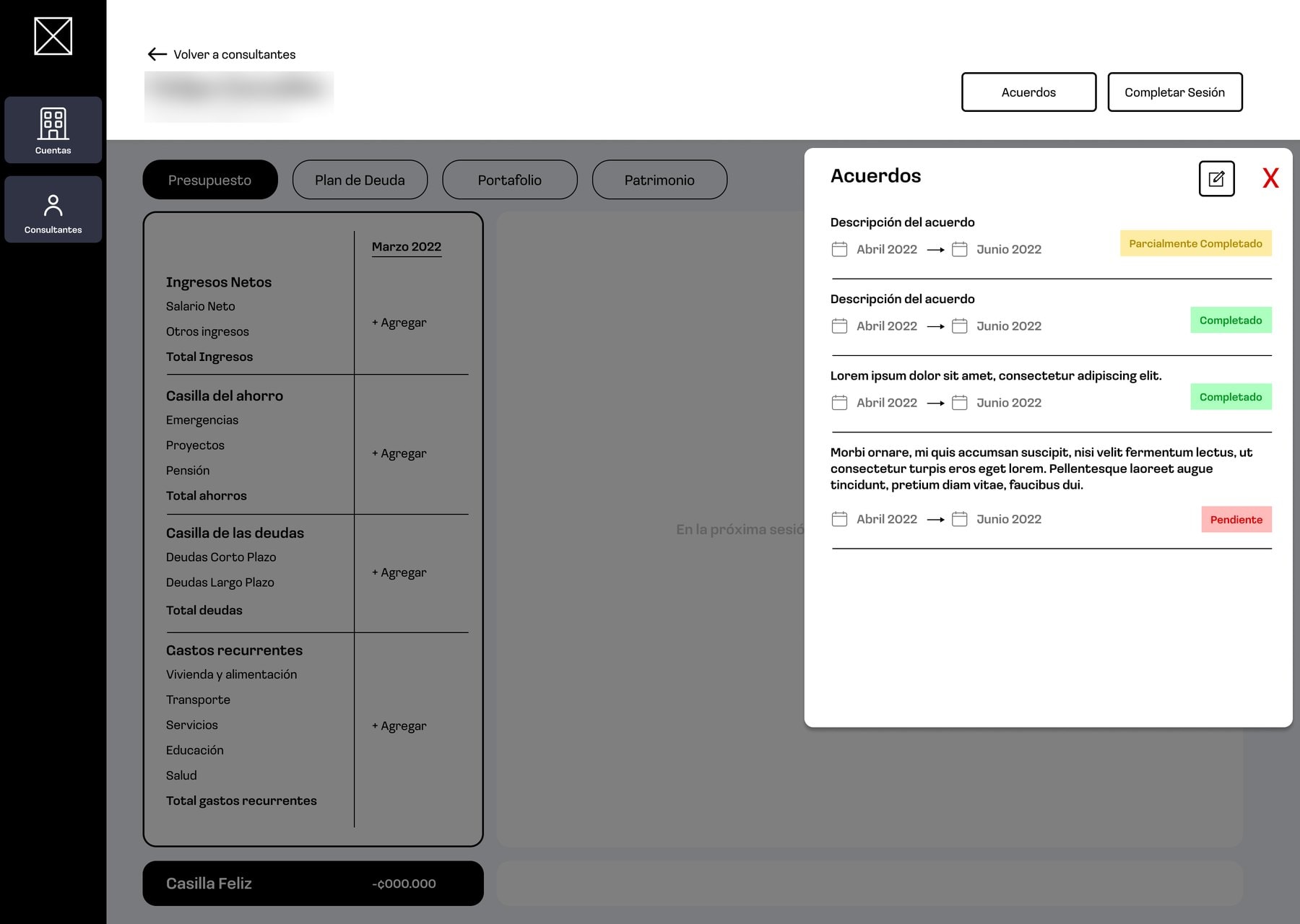
The platform has four roles: the client, the planner, the financial entity's account administrator and the firm's system administrator. The core is the session screen, where the planner works through the four modules while an agreements panel tracks each commitment as completed, partial or pending.
Concept, then the build
The look and feel had to carry "the solidity and modernity of a fintech, yet friendly and warm enough to empathize with its most vulnerable audience." From July 2022 I reviewed the development builds with the agency. My notes set one hierarchy for every module, status first and then one key figure, ranked the chart types, and specified fixes: the current session ahead of past ones, breadcrumbs instead of a Home button, and read-only tables that no longer looked editable.
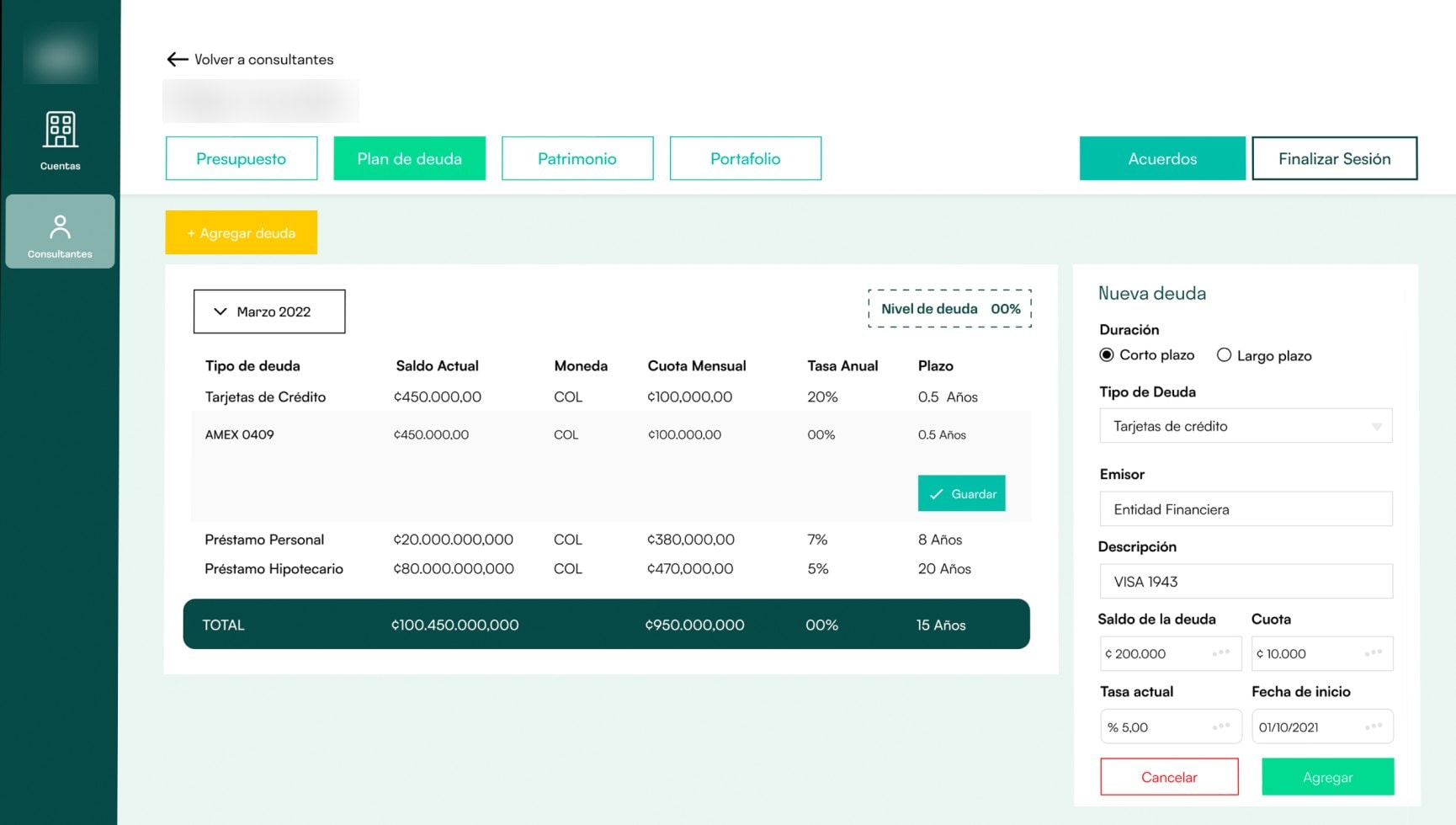
In October 2022 I handed off 47 screens covering login, administration and reports, client and planner profiles and the full session flow, with a design system, three email templates and the Figma file. Finishing a session generates the ratios, emails the result and locks the data.
Results
47
final screens, plus a design system and three email templates
Everything was delivered, and the client uses the platform
Client details are omitted or blurred for confidentiality.